

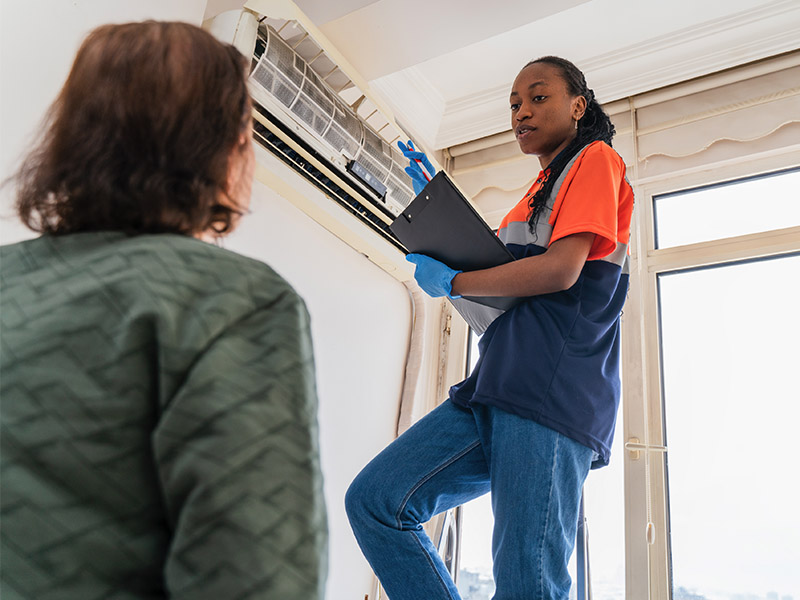
When your heating or cooling system starts to underperform, you’re faced with a decision every homeowner encounters at some point: should you repair it or replace it altogether?
To make the right call, you need to look beyond the immediate issue and consider the bigger picture. Your system’s age, its energy efficiency, how often it needs repairs, and how well it maintains consistent comfort all play a role. If you overlook these factors, you could end up dealing with repeated breakdowns, rising utility bills, and ongoing frustration.
At Exxel Mechanical Services, we’ve seen homeowners struggle with this exact decision, which is why it’s important to understand what really matters before moving forward.
In this guide, you’ll learn how to tell when a repair makes sense, when replacement is the better investment, and what each option means for your comfort and long-term costs. By the end, you’ll have a clear framework to help you choose the best path forward for your HVAC system and your home.
Signs Your HVAC System May Only Need Repair
Before jumping to a full system replacement, it’s worth understanding that many HVAC issues can be resolved with a targeted repair. In fact, addressing problems early can often restore performance, improve efficiency, and extend the life of your system without the need for a major investment.
With that in mind, certain symptoms typically point to repairable issues rather than system failure. If your HVAC system is showing any of the following signs, a professional repair may be all that’s needed:
- Uneven temperatures between rooms
- Strange noises such as banging, rattling, or squealing
- Musty or burning odors coming from vents
- Frequent cycling, where the system turns on and off repeatedly
- Weak or reduced airflow
In most cases, these problems are caused by worn components, clogged filters, thermostat malfunctions, or ductwork issues. Because of that, they can often be diagnosed and fixed relatively quickly by a qualified technician.
When Repairs Make the Most Sense
Beyond specific symptoms, timing and system condition also play an important role. Repairs tend to make the most sense when your HVAC system is still relatively new and hasn’t required frequent service. If the issue is isolated and the cost is reasonable, repairing your system can restore comfort without the higher expense of replacement.
When It’s Time to Consider Replacing Your HVAC System
While repairs can resolve many common issues, there comes a point when continuing to fix your system no longer makes financial or practical sense. Recognizing when you’ve reached that point can help you avoid ongoing expenses and unnecessary frustration.
Key Signs You Need a New HVAC System
As your system ages, certain warning signs become more difficult to ignore. If you’re experiencing any of the following, it may be time to seriously consider a replacement:
- Your HVAC system is 10 to 15 years old or older
- You’re scheduling repairs more frequently throughout the year
- Your energy bills continue to rise without a clear reason
- Your home struggles to maintain consistent temperatures
- Major components, such as the compressor or heat exchanger, have failed
Even if your system is still running, it naturally becomes less efficient over time. At the same time, it lacks the advanced technology found in newer systems, which can significantly improve both comfort and energy efficiency.
Performance and Reliability Concerns
Beyond age and repair frequency, overall performance is just as important. If your system struggles to keep up during extreme temperatures or tends to break down when you need it most, it’s no longer dependable.
At that point, replacement becomes less about upgrading and more about restoring reliability. A new system offers consistent performance, fewer unexpected service calls, and greater peace of mind.
By recognizing these signs early, you can plan ahead and make a controlled, informed decision instead of being forced into an emergency replacement at the worst possible time.
Repair vs. Replacement: Understanding the True Cost
Cost is often the biggest factor in most homeowners’ decisions, but focusing only on upfront pricing can be misleading. You need to evaluate both short-term and long-term financial impact.
Short-Term vs Long-Term Investment
Repairs may seem more affordable initially, but repeated service calls can quickly add up. What starts as a few hundred dollars can turn into thousands over time if problems persist.
Replacement, on the other hand, requires a larger upfront investment. However, it often eliminates ongoing repair costs and provides more predictable performance.
Cost Comparison Breakdown
Repair is typically the better option when:
- The issue is minor and inexpensive
- Your system is under 10 years old
- Repairs are infrequent
Replacement is often the better choice when:
- Repair costs exceed 50% of a new system
- Breakdowns are becoming routine
- Efficiency has noticeably declined
Hidden Costs to Consider
Don’t forget to factor in energy usage, maintenance frequency, and system lifespan. A newer system can significantly reduce monthly utility bills, helping offset the initial investment over time.
When you look at the full financial picture, replacement often delivers better long-term value.
Energy Efficiency and Why It Matters More Than Ever
Energy efficiency is a key factor when deciding between repairing and replacing your HVAC system. While a repair may fix the immediate issue, it won’t solve the ongoing cost of a system that’s using more energy than it should.
The Real Impact of an Aging System
In many cases, that inefficiency comes down to age. As HVAC systems get older, they lose efficiency and have to work harder to maintain the same level of comfort.
Worn components and outdated technology lead to longer run times, higher energy bills, and inconsistent temperatures throughout your home.
Upgrading to a modern, high-efficiency system can reverse those issues. Newer systems are designed to deliver better performance while using less energy, often reducing utility costs by 20 to 30 percent.
Although replacement requires a higher upfront investment, the long-term savings from improved efficiency and fewer repairs can make it the more cost-effective option. If your system is aging and your energy bills keep rising, it may be time to consider whether a replacement makes more financial sense.
Comfort, Air Quality, and System Reliability
Beyond energy efficiency, your HVAC system has a direct impact on how your home feels every day. As performance begins to decline, the effects show up not just in your utility bills, but in your overall comfort and indoor air quality.
You may start to notice uneven temperatures from room to room, difficulty maintaining a consistent setting, or changes in humidity levels. These issues often develop gradually, but over time, they can become serious problems.
At the same time, older systems tend to fall short when it comes to air quality. As components wear down and filtration becomes less effective, dust, allergens, and other airborne particles can circulate more freely throughout your home. This is especially noticeable for anyone dealing with allergies or respiratory concerns.
As these comfort and air quality issues persist, reliability often becomes the deciding factor. Frequent breakdowns or poor performance during extreme weather make it difficult to depend on your system when you need it most. When that happens, replacement becomes less about preference and more about restoring consistent, predictable performance.
Get Help Making the Right Decision from Exxel Mechanical Services
Ultimately, deciding whether to repair your HVAC system or replace it requires evaluating multiple factors together and having expert insight into the long-term efficiency of each option. Exxel Mechanical Services can help you through this process.
As a trusted HVAC company in Maryland, we provide expert HVAC inspections, transparent recommendations, and high-quality solutions tailored to your home. Our goal is to deliver lasting comfort, improved efficiency, and peace of mind.
So don’t wait for a complete system failure to take action. If your HVAC system isn’t performing as it should, contact us today to schedule your HVAC evaluation and get a clear answer on whether repair or replacement is the right move for your home.