

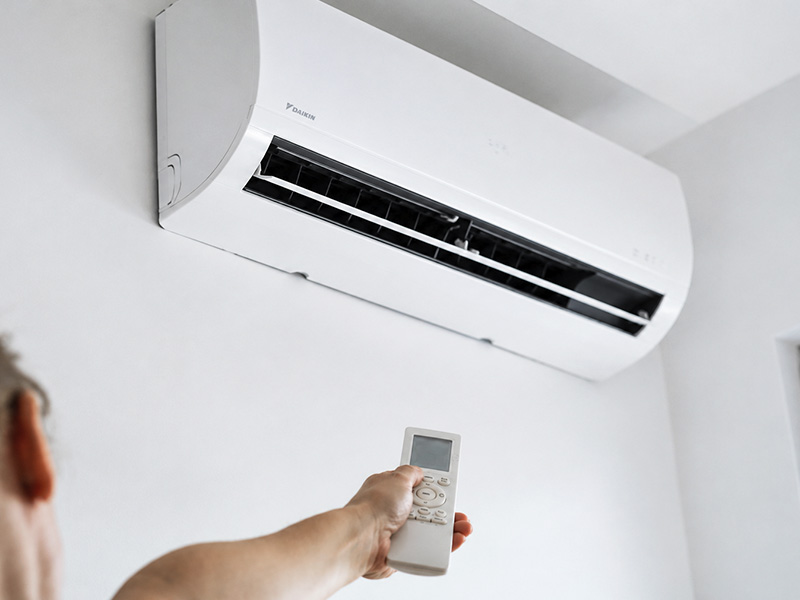
If certain rooms in your home are always too hot or too cold, or you want to add heating and cooling without installing extensive ductwork, a ductless mini-split may be worth considering. These systems can provide targeted comfort while giving you more control over individual areas of your home.
Still, a mini-split isn’t the right solution for every property. Your existing HVAC system, floor plan, insulation, comfort needs, and budget all matter. Understanding how ductless systems work, where they make the most sense, and what to consider before installation can help you decide whether one fits your home.
What Is a Ductless Mini-Split and How Does It Work?
A ductless mini-split is a heating and cooling system that doesn’t rely on traditional ductwork. Instead, it uses an outdoor unit connected to one or more indoor air handlers that deliver conditioned air directly into the rooms they serve.
During cooling, the system transfers heat from inside your home to the outdoors. If the mini-split is a heat pump, it can reverse that process during colder weather and transfer heat indoors.
Many modern systems also use variable-speed or inverter-driven technology. Rather than operating only at full power and then shutting off, the equipment can adjust its output as your heating or cooling needs change. This can help maintain more consistent indoor temperatures.
You generally have two configurations to consider:
- Single-zone systems: One outdoor unit serves one indoor air handler and one specific area.
- Multi-zone systems: One outdoor system serves multiple indoor units in different areas of your home.
A single-zone mini-split may be enough for a home office, finished basement, bonus room, or addition. A multi-zone system may make more sense when several parts of your home need independent temperature control.
When Does a Ductless Mini-Split Make Sense?
Ductless HVAC is often most useful when you need to solve a specific comfort problem without making major changes to the rest of your heating and cooling system. The best applications usually involve spaces that are difficult to serve with traditional ductwork or areas that need more independent temperature control.
Your Home Doesn’t Have Existing Ductwork
If your home uses radiators, baseboard heating, a boiler, or another system without ducts, adding air conditioning can require significant construction. Installing new ductwork may mean opening walls, ceilings, or floors, and some homes simply don’t have enough space to route ducts easily.
A ductless mini-split gives you another option by delivering heating and cooling directly into the rooms you want to condition without requiring a full duct network.
You’re Adding or Converting Living Space
A finished basement, sunroom, garage conversion, attic, or home addition may not be adequately served by your current HVAC system. Extending existing ductwork isn’t always practical, especially if your equipment wasn’t sized for the added square footage.
A dedicated mini-split can give the new space its own temperature control without requiring major changes to the rest of your system.
One Area Is Consistently Too Hot or Too Cold
Some rooms are harder to keep comfortable because of sun exposure, high ceilings, limited airflow, or their location within the home. Adjusting your central thermostat to compensate can affect every other room without fully solving the problem.
A ductless system can target that specific space and provide the additional heating or cooling it needs.
You Want More Control Over Separate Zones
If different areas of your home have different comfort needs, a multi-zone mini-split can give you more flexibility than a single central thermostat. You can adjust individual areas based on how often they’re used and the temperatures you prefer, which makes ductless HVAC especially useful when you want more localized control without replacing an otherwise functional central system.
Extending Ductwork Would Be Difficult
In some homes, running new ducts simply isn’t practical because of limited space, structural constraints, or the amount of renovation required. In those situations, a mini-split may offer a less invasive way to add heating and cooling while avoiding major changes to walls, ceilings, or floors.
The key is identifying the specific comfort or installation challenge you’re trying to solve. When the system is matched to the right application, ductless HVAC can provide a targeted solution without unnecessary changes to the rest of your home.
What Are the Benefits and Considerations of Ductless Mini-Splits?
A ductless mini-split can give you more control over comfort while avoiding the need for traditional ductwork. Before deciding, it helps to compare the main benefits with the practical considerations that come with installation and ownership.
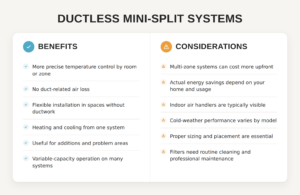
For many homeowners, the biggest advantage is flexibility. You can improve comfort in a specific area, add HVAC to a space without ductwork, or create separate temperature zones without necessarily replacing your entire system.
The main consideration is that ductless HVAC still needs to be designed around your home. Proper sizing, equipment placement, and professional installation all affect how well the system performs over time.
Can a Mini-Split Heat Your Home and Help Control Energy Costs?
Many ductless mini-splits are heat pumps, which means they can provide both heating and cooling. That can make them useful for year-round comfort, but performance in colder weather varies by model and operating conditions.
Your home’s insulation, air leakage, window performance, and overall heat loss also affect how well a system can maintain comfort during winter. If you’re considering a mini-split as your primary heat source, the equipment should be selected based on your home’s actual heating requirements and local winter conditions.
A mini-split may also help you use energy more strategically, especially if zoning allows you to focus heating or cooling where you actually need it. If you spend most of the day in one part of your home, you may be able to keep that area comfortable without conditioning less-used spaces as aggressively.
There’s no universal energy savings percentage that applies to every homeowner. Your results will depend on your current HVAC equipment, utility rates, insulation, system efficiency, thermostat settings, and how you use each zone.
Should You Replace Central HVAC or Add a Mini-Split?
You don’t always have to choose between central HVAC and ductless heating and cooling. In many homes, a mini-split works best as a supplement rather than a complete replacement.
If your central system performs well throughout most of your home but one area remains uncomfortable, adding a ductless unit may be the simpler solution. Bonus rooms, finished basements, new additions, and upstairs bedrooms are common areas where supplemental ductless HVAC can make sense. A larger ductless conversion may be more practical if your home doesn’t have ductwork, your existing ducts are difficult to repair, or your current HVAC equipment is already due for replacement.
Before deciding, consider:
- Whether your existing HVAC system is still performing well
- How many rooms actually need additional conditioning
- Whether your ductwork is usable and in good condition
- How much individual temperature control you want
- Whether you need heating, cooling, or both
Our team looks at the whole HVAC system before recommending a solution. If a mini-split isn’t the most practical way to solve your comfort problem, you should know that before investing in new equipment.
What Should You Know Before Mini-Split Installation?
A successful ductless mini-split installation starts with proper planning. System sizing, equipment placement, refrigerant piping, condensate drainage, and electrical connections can all affect performance and reliability.
Indoor units need to be positioned where conditioned air can circulate effectively, while outdoor equipment needs adequate clearance and access for future service. The number of zones should also reflect your actual comfort needs rather than simply adding an indoor unit to every room.
Professional evaluation matters because the cause of an uncomfortable room isn’t always obvious. A space may be too hot because of poor insulation, excessive sun exposure, air leakage, limited airflow, or inadequate HVAC capacity.
Our team can help determine what’s causing the problem before recommending equipment. That approach helps make sure you’re solving the underlying issue instead of adding a system that may not deliver the improvement you expected.
Once installed, routine maintenance is relatively straightforward but still important. You should clean or inspect indoor filters regularly, keep the outdoor unit clear of debris, and watch for unusual noises, leaks, or changes in performance. Professional HVAC maintenance can address system conditions and components that aren’t practical for you to evaluate on your own.
Find the Right Ductless Mini-Split Solution With Exxel Mechanical Services
A ductless mini-split can be a smart choice if you need zoned comfort, heating and cooling in a space without ductwork, or a targeted solution for an area your current HVAC system doesn’t serve well. Whether it’s right for your home depends on your layout, existing equipment, comfort concerns, and long-term goals.
With Exxel Mechanical Services, you’ll get guidance based on what your home actually needs. We can evaluate your current HVAC setup, discuss ductless mini-split options, and help you determine whether adding, replacing, or upgrading equipment makes the most sense.
If you’re considering a ductless mini-split installation, contact Exxel Mechanical Services today to schedule an HVAC consultation and find the right heating and cooling solution for your home.